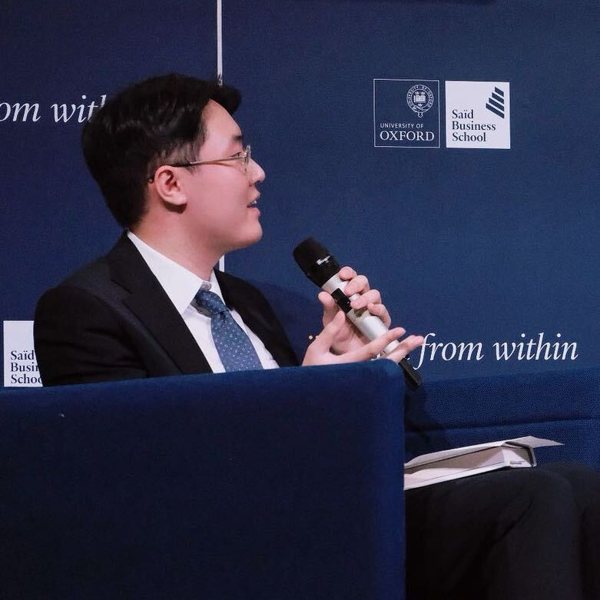
How Does AI Think?
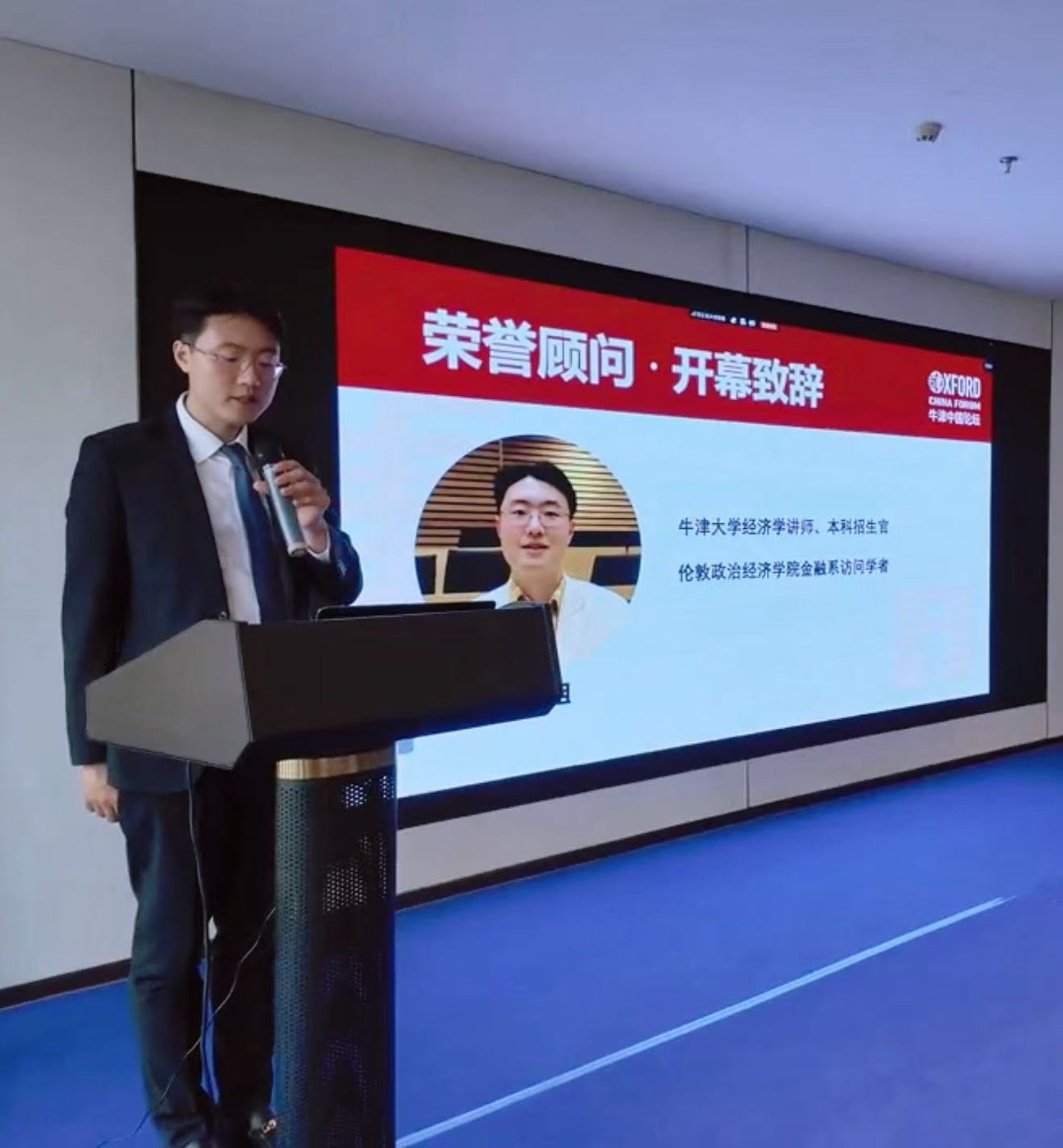
Opening remarks delivered as Honorary Advisor at the Oxford China Forum 2026 Summer Forum, Chongqing. English translation followed by the original Chinese text.
English
Distinguished guests and teachers, President Jintian, and friends from Oxford,
It is a great honour to deliver the opening remarks for the Oxford China Forum 2026 Summer Forum, and an honour to take on a topic that is simple, yet slightly unsettling: How does AI think?
As an economist working in economics and finance, most of my research deals with a narrower question: how people make strategic decisions when their information and time are limited. In this tradition, “thinking” is not a mysterious process. It is closer to a production process: information enters the system as an input, undergoes some internal transformation, and comes out as a judgement. Understood this way, the question this forum poses — is AI really thinking, or merely retrieving? — is at heart a question about what actually happens inside that transformation.
This is exactly the question the first half of today’s forum will confront head-on. When a model finishes training, what has actually changed inside it? Should the structures that emerge be called “concepts”, or are they merely a dense web of statistical correlations that happens to look like concepts from the outside? I believe we should neither rush to answer this question by analogy with the human brain, nor rush to dismiss it by analogy. Behavioural agreement — a model reasoning its way to the same conclusion as a human — is evidence, but it is not proof that the mechanism is the same. Economists and statisticians know this problem well: two entirely different processes can generate exactly the same equilibrium outcome. The truly interesting work has never been in the outcome itself, but in the mechanism.
And once this question enters the firm, it is no longer merely philosophical. This is where the second half of the forum begins, and it is an area I have followed closely. What is an organisation? At its core, an organisation is a machine for allocating the authority to make judgements. Who makes which decision, on the basis of what information, and who bears the consequences when the decision is wrong — that is the whole of management. When AI enters this machine, it brings not just efficiency gains, but a reallocation of judgement itself. Drafting, summarising, preliminary assessment — these used to be the work of junior staff. And it is precisely through this work that junior employees gradually grow into senior ones. If models take over this layer, we gain efficiency, but we may, without noticing, change the path through which the members of a firm develop their judgement.
This question becomes especially concrete in Chongqing. Chongqing is a city in the midst of dramatic transformation: manufacturing is upgrading, industries are being restructured, and young people face more choices than ever before. When a machine can produce a draft, a plan, or a plausible-looking argument in seconds, the scarce resource is no longer content itself, but judgement — judging what is true, what is original, and what deserves our trust.
This strikes directly at our existing institutional design. Copyright, pricing, our intuitions about what it means to be an “author” — all of these were designed for a world in which producing content was the hard part. In a recent lecture at Oxford, Nobel laureate Professor Joseph Stiglitz raised a concern that I find particularly fitting here: when AI makes information extremely cheap to obtain, and paying for information is no longer enough to sustain people’s efforts to acquire new, true information, how do we make sure we are not surrounded by falsehoods?
These are big questions that we all face together, and they are what make this forum so meaningful. “How does AI think?” is worth asking not because it is interesting, but because the answer will change how we should act — how we design organisations, how we nurture young people, how we draft contracts, and how we write regulation. This is exactly where model mechanisms meet business practice. I look forward to the insights and discussions from our speakers, which I hope will offer fresh perspectives and help us solve the puzzle. Thank you!
中文原文
尊敬的嘉宾老师们、锦添主席,和牛津的朋友们,
很荣幸能在今天为牛津中国论坛2026夏季论坛开场致辞,也很荣幸面对这样一个题目——简洁,却又让人略感不安:AI如何思考。
作为一名经济和金融学家,我大部分的研究工作,其实都在处理一个更窄的问题:人在信息有限、时间有限的条件下,如何做出策略性决策。在这个传统里,“思考”并不是什么神秘的过程,而更像是一个生产过程——信息作为投入进入系统,经过某种内部转化,产出一个判断。如果这样理解,今天论坛提出的问题——AI究竟是在思考,还是仅仅在检索——本质上是在追问:这个转化过程,内部到底发生了什么?
这正是上半场要正面回答的问题。当一个模型完成训练,它内部究竟改变了什么?涌现出来的结构,应该被称为“概念”,还是只是统计相关性织成的密网,恰好从外部看起来像概念?我认为我们不应该急于用人脑做类比来回答这个问题,也不应该急于用类比去否定它。行为上的一致——模型推理出与人相同的结论——是证据,但不是机制相同的证明。经济和统计学家对这个问题并不陌生:两个完全不同的过程,完全可能生成同一个均衡结果。真正有意思的工作,从来不在结果本身,而在机制。
而这个问题一旦走进企业,就不再只是哲学问题了。这正是下半场的起点,也是我个人投入较多关注的领域。组织是什么?组织本质上是一台分配判断权的机器。谁在什么信息基础上做哪个决定,决定错了谁承担后果——这就是管理的全部。当AI进入这台机器,它带来的不只是效率提升,而是判断权本身的重新分配。起草、归纳、初步评估——这些过去是初级岗位的工作。而正是通过这些工作,初级员工才慢慢长成了资深员工。如果模型接管了这一层,我们获得了效率,但可能在不知不觉中,改变了企业成员判断力得以培养的路径。
这个问题在重庆变得格外具体。重庆是一座正在剧烈转型的城市——制造业在升级,产业在重构,年轻人面临的选择比任何时候都多。当一台机器几秒钟就能生成一份草稿、一个方案、一个看似成立的论证时,稀缺的资源就不再是内容本身,而是判断力。判断什么是真的,什么是原创的,什么值得信任。
这直接冲击着我们现有的制度设计。版权、定价、我们对“作者”这个身份的直觉——全都是为一个“生产内容才是难点”的世界设计的。前一段诺贝尔奖得主Joe Stiglitz教授在牛津讲座时提了一个担忧,我觉得放在这里特别合适:当AI让信息的获取变得极其便宜,如果为信息付费不足以支撑人们去获取新的真实信息,我们要怎么确保自己不被虚假信息包围?
这些问题是我们所共同面对的大问题,它们的存在使得这次论坛非常有意义。“AI如何思考”之所以值得追问,不是因为它有趣,而是因为答案会改变我们该如何行动——如何设计组织,如何培养年轻人,如何起草合同,如何制定监管。这正是模型机制与企业实践相遇的地方。期待接下来的嘉宾们的分享和讨论会为大家提供崭新的视角,帮助我们揭开谜底。谢谢!